Yesterday I wrote a vision-spiel about home computer and internet use after a major social collapse (goto that blog entry). I called the next paradigm internet the Organic-Connected-World (OCW).
In the 20th and 21st Century, world systems interventionists have been trying to create varying forms of revolution that shatter global interconnectivity and economy of scale, or trying to turn back the clock to that state of affairs when WASPs ruled the world. I recommend neither. I recommend a dialectic of the two -recognizing that industrialization and global trade brought forth a higher culture, but break the strong semantic and functional binding with anything WASP. To accomplish this a collapse of certain aspects of the global system needs to occur, but not an eternal total collapse such as many leftist systems interventionists dream of.
So I'm asking the reader to jump in sideways to get an idea of the vision-spiel, maybe go to my previous post here, read the comments my friends made in the post also, then proceed to the words below as my stream-of-consciousness tech spec-ing for this paradigm shift that reinvents global trade and industrialization.
The OCW harkens back to the original Internet design spec of Paul Baran -a resilient packet-switching network that can withstand nuclear attack.
Think of that 1969 internet, designed for sustaining communication while nodes are being subtracted by nuclear bombs, viruses, gremlins, or The Chicago Bears. That internet was not for media-propaganda as it is today. By propaganda I am not pointing at the State or Madison Ave only, but also myself and this blog. We have gotten used to this save-my-rant-as-a-one-to-many-document. I believe the OCW would weed out a lot of this superfluous stance-oriented dialogue, and replace with a more functional-in-the-now dialogue.
This would be a major blow to how we've gotten used to dialoguing, but my contention is it would be healthy because it would get people away from living their lives as reactionaries to each others oppositional stances. ( I'm not a naive peacemonger, but do believe most that aren't a murdering thief or religious terrorist are wanting a lot of the same baseline culture.)
So why get online then, in an era of transient and ecosystem oriented content? Answer: To survive, or survive in better style. More specifically: To trade globally(!) THAT is the design challenge of the OCW. The 1969 internet was designed to let military brass and FEMA send messages to each other while the situation was dire and ad-hoc. I'm not anti military-brass or FEMA, but believe trade as its been practiced since colonialism is more responsible for creating higher culture. The OCW's role should allow that.
So there is the design challenge, as I see it. Stepping inwards towards tech specifics, I see these vision nodes:
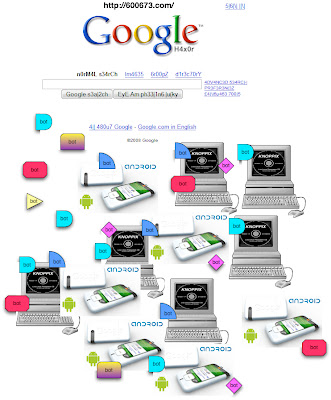
Set up research lab with ability to rewrite Knoppix Live-CD versions. Write the viruses and rewrite the Live-CD as if they are all that exists. The reason: the pieces are not going to connect to today's pieces.
Call the Live-CD the hardbits, the viruses the softbits. ( Notice how hardware finally gets dethroned as an important level of the schema in this paradigm)
Make the softbits work in a fast scale network modality. From user perspective: User remembers the node addresses of trusted entities. At each boot up user dials to 1 or more of these trusted nodes. If all trusted nodes are dead/evil-infected, then user is SOL and starts finding some. Once a node is reached (evil of good) the user fast propagates in connectivity ( I guess this is just DNS 101). The higher level softbits provide a means to Ebay/Craigslist in this transient ecosystem. At the most ambitious I would like to see the OCW facilitate large scale operations such as motherboard suppliers in Taiwan providing their wares to a computer manufacturer in Seattle.





 Posts
Posts


