Cinema often offers great critique of the human condition with the use of ravenous hordes of demons, bad-aliens, zombies, mutants, or horseback/motorcycle riders. These sick hordes swarm into nice villages and destroy things. The good guys either successfully defeat them (in older movies and Mars Attacks) or just outrun them (newer movies and 28 Days Later), or the hordes win and all the nice people die (28 Months Later). A subtle and truly full treatment of all outcomes
is in the Buffy/Angel series.
I am not talking about Cinema in this post. But the familiar scenes of massive carnage in movies can be seen in our real world,
and the ravenous, vile attacker is Mysticism. Mysticism in language, specifically.
In the last decades of the 20th century Mysticism seemed to find renewed vigor with the schtick of Postmodernism. At its most basic axioms, Postmodernism postulated that objective language did not map well onto reality. Objective statements were merely the subjective experience of a dominant class imposed as dogma. Beyond the dominance issue, Mystical Postmodernists attempted to operate on the logical plane
by emphasizing the compression that goes on in objectivity. The world is full of so many dimensions to a given perception,
with a wild and dynamic range of variables and hierarchies, the Mystical Postmodernists found what they thought was the scene of a crime by pointing to objective process squashing the world to an oversimplification.
The only crime at the scene has been the depravity of the Mystical Postmodernists.
While pointing at the simplification processing within objectivity, or logical taxonomies as a lesser taxonomy to living relationship taxonomies, Mysticism commits a much greater crime of oversimplification.
How? By compression to no dimension. Objective language reduces a subject to less dimensions than its reality,
Mysticism reduces a subject to the least of all: zero dimensions. While platonic forms are one dimensional, Mysticism provides the final negation in subtracting the platonic archetype. Gone are the objects, and gone are the logical taxonomies. Living relationship is all that remains.
I like to play a language game: { If a Y always practices X, they never practice X }. Example: If Mysticism professes to maintain living relationship, then it never maintains living relationship.
Societies strongly bound to Mysticism carve the best out of their every relationship, leaving an impoverished nihilism with no language/mental mechanism to get itself out of its zero dimensional trap.
A walking dead group that cannot help themselves, but can destroy others by critiquing their ability to live. And by "live" I mean perceive and store new information, adapt, and engineer -all of which are an imperfect process easily sniped by a metaphysical ethos.
The test of the 21st century is whether the living recognize the offense of the dead.
Way to go Charles Barkley! Exactly how I feel also. The good people in our world (the people who work hard, are nice to their neighbors) are a thoroughly mixed group, with homosexuals certainly included. Christians wanting to exclude these good people from the joys and benefits of legal marriage are not helping our world be a better place.
“We the people, in order to form a more perfect union.”
Two hundred and twenty one years ago, in a hall that still stands across the street, a group of men gathered and, with these simple words, launched America’s improbable experiment in democracy. Farmers and scholars; statesmen and patriots who had traveled across an ocean to escape tyranny and persecution finally made real their declaration of independence at a Philadelphia convention that lasted through the spring of 1787.
The document they produced was eventually signed but ultimately unfinished. It was stained by this nation’s original sin of slavery, a question that divided the colonies and brought the convention to a stalemate until the founders chose to allow the slave trade to continue for at least twenty more years, and to leave any final resolution to future generations.
Of course, the answer to the slavery question was already embedded within our Constitution – a Constitution that had at is very core the ideal of equal citizenship under the law; a Constitution that promised its people liberty, and justice, and a union that could be and should be perfected over time.
And yet words on a parchment would not be enough to deliver slaves from bondage, or provide men and women of every color and creed their full rights and obligations as citizens of the United States. What would be needed were Americans in successive generations who were willing to do their part – through protests and struggle, on the streets and in the courts, through a civil war and civil disobedience and always at great risk - to narrow that gap between the promise of our ideals and the reality of their time.
This was one of the tasks we set forth at the beginning of this campaign – to continue the long march of those who came before us, a march for a more just, more equal, more free, more caring and more prosperous America. I chose to run for the presidency at this moment in history because I believe deeply that we cannot solve the challenges of our time unless we solve them together – unless we perfect our union by understanding that we may have different stories, but we hold common hopes; that we may not look the same and we may not have come from the same place, but we all want to move in the same direction – towards a better future for of children and our grandchildren.
This belief comes from my unyielding faith in the decency and generosity of the American people. But it also comes from my own American story.
I am the son of a black man from Kenya and a white woman from Kansas. I was raised with the help of a white grandfather who survived a Depression to serve in Patton’s Army during World War II and a white grandmother who worked on a bomber assembly line at Fort Leavenworth while he was overseas. I’ve gone to some of the best schools in America and lived in one of the world’s poorest nations. I am married to a black American who carries within her the blood of slaves and slaveowners – an inheritance we pass on to our two precious daughters. I have brothers, sisters, nieces, nephews, uncles and cousins, of every race and every hue, scattered across three continents, and for as long as I live, I will never forget that in no other country on Earth is my story even possible.
It’s a story that hasn’t made me the most conventional candidate. But it is a story that has seared into my genetic makeup the idea that this nation is more than the sum of its parts – that out of many, we are truly one.
Throughout the first year of this campaign, against all predictions to the contrary, we saw how hungry the American people were for this message of unity. Despite the temptation to view my candidacy through a purely racial lens, we won commanding victories in states with some of the whitest populations in the country. In South Carolina, where the Confederate Flag still flies, we built a powerful coalition of African Americans and white Americans.
This is not to say that race has not been an issue in the campaign. At various stages in the campaign, some commentators have deemed me either “too black” or “not black enough.” We saw racial tensions bubble to the surface during the week before the South Carolina primary. The press has scoured every exit poll for the latest evidence of racial polarization, not just in terms of white and black, but black and brown as well.
And yet, it has only been in the last couple of weeks that the discussion of race in this campaign has taken a particularly divisive turn.
On one end of the spectrum, we’ve heard the implication that my candidacy is somehow an exercise in affirmative action; that it’s based solely on the desire of wide-eyed liberals to purchase racial reconciliation on the cheap. On the other end, we’ve heard my former pastor, Reverend Jeremiah Wright, use incendiary language to express views that have the potential not only to widen the racial divide, but views that denigrate both the greatness and the goodness of our nation; that rightly offend white and black alike.
I have already condemned, in unequivocal terms, the statements of Reverend Wright that have caused such controversy. For some, nagging questions remain. Did I know him to be an occasionally fierce critic of American domestic and foreign policy? Of course. Did I ever hear him make remarks that could be considered controversial while I sat in church? Yes. Did I strongly disagree with many of his political views? Absolutely – just as I’m sure many of you have heard remarks from your pastors, priests, or rabbis with which you strongly disagreed.
But the remarks that have caused this recent firestorm weren’t simply controversial. They weren’t simply a religious leader’s effort to speak out against perceived injustice. Instead, they expressed a profoundly distorted view of this country – a view that sees white racism as endemic, and that elevates what is wrong with America above all that we know is right with America; a view that sees the conflicts in the Middle East as rooted primarily in the actions of stalwart allies like Israel, instead of emanating from the perverse and hateful ideologies of radical Islam.
As such, Reverend Wright’s comments were not only wrong but divisive, divisive at a time when we need unity; racially charged at a time when we need to come together to solve a set of monumental problems – two wars, a terrorist threat, a falling economy, a chronic health care crisis and potentially devastating climate change; problems that are neither black or white or Latino or Asian, but rather problems that confront us all.
Given my background, my politics, and my professed values and ideals, there will no doubt be those for whom my statements of condemnation are not enough. Why associate myself with Reverend Wright in the first place, they may ask? Why not join another church? And I confess that if all that I knew of Reverend Wright were the snippets of those sermons that have run in an endless loop on the television and You Tube, or if Trinity United Church of Christ conformed to the caricatures being peddled by some commentators, there is no doubt that I would react in much the same way
But the truth is, that isn’t all that I know of the man. The man I met more than twenty years ago is a man who helped introduce me to my Christian faith, a man who spoke to me about our obligations to love one another; to care for the sick and lift up the poor. He is a man who served his country as a U.S. Marine; who has studied and lectured at some of the finest universities and seminaries in the country, and who for over thirty years led a church that serves the community by doing God’s work here on Earth – by housing the homeless, ministering to the needy, providing day care services and scholarships and prison ministries, and reaching out to those suffering from HIV/AIDS.
In my first book, Dreams From My Father, I described the experience of my first service at Trinity:
“People began to shout, to rise from their seats and clap and cry out, a forceful wind carrying the reverend’s voice up into the rafters….And in that single note – hope! – I heard something else; at the foot of that cross, inside the thousands of churches across the city, I imagined the stories of ordinary black people merging with the stories of David and Goliath, Moses and Pharaoh, the Christians in the lion’s den, Ezekiel’s field of dry bones. Those stories – of survival, and freedom, and hope – became our story, my story; the blood that had spilled was our blood, the tears our tears; until this black church, on this bright day, seemed once more a vessel carrying the story of a people into future generations and into a larger world. Our trials and triumphs became at once unique and universal, black and more than black; in chronicling our journey, the stories and songs gave us a means to reclaim memories tha t we didn’t need to feel shame about…memories that all people might study and cherish – and with which we could start to rebuild.”
That has been my experience at Trinity. Like other predominantly black churches across the country, Trinity embodies the black community in its entirety – the doctor and the welfare mom, the model student and the former gang-banger. Like other black churches, Trinity’s services are full of raucous laughter and sometimes bawdy humor. They are full of dancing, clapping, screaming and shouting that may seem jarring to the untrained ear. The church contains in full the kindness and cruelty, the fierce intelligence and the shocking ignorance, the struggles and successes, the love and yes, the bitterness and bias that make up the black experience in America.
And this helps explain, perhaps, my relationship with Reverend Wright. As imperfect as he may be, he has been like family to me. He strengthened my faith, officiated my wedding, and baptized my children. Not once in my conversations with him have I heard him talk about any ethnic group in derogatory terms, or treat whites with whom he interacted with anything but courtesy and respect. He contains within him the contradictions – the good and the bad – of the community that he has served diligently for so many years.
I can no more disown him than I can disown the black community. I can no more disown him than I can my white grandmother – a woman who helped raise me, a woman who sacrificed again and again for me, a woman who loves me as much as she loves anything in this world, but a woman who once confessed her fear of black men who passed by her on the street, and who on more than one occasion has uttered racial or ethnic stereotypes that made me cringe.
These people are a part of me. And they are a part of America, this country that I love.
Some will see this as an attempt to justify or excuse comments that are simply inexcusable. I can assure you it is not. I suppose the politically safe thing would be to move on from this episode and just hope that it fades into the woodwork. We can dismiss Reverend Wright as a crank or a demagogue, just as some have dismissed Geraldine Ferraro, in the aftermath of her recent statements, as harboring some deep-seated racial bias.
But race is an issue that I believe this nation cannot afford to ignore right now. We would be making the same mistake that Reverend Wright made in his offending sermons about America – to simplify and stereotype and amplify the negative to the point that it distorts reality.
The fact is that the comments that have been made and the issues that have surfaced over the last few weeks reflect the complexities of race in this country that we’ve never really worked through – a part of our union that we have yet to perfect. And if we walk away now, if we simply retreat into our respective corners, we will never be able to come together and solve challenges like health care, or education, or the need to find good jobs for every American.
Understanding this reality requires a reminder of how we arrived at this point. As William Faulkner once wrote, “The past isn’t dead and buried. In fact, it isn’t even past.” We do not need to recite here the history of racial injustice in this country. But we do need to remind ourselves that so many of the disparities that exist in the African-American community today can be directly traced to inequalities passed on from an earlier generation that suffered under the brutal legacy of slavery and Jim Crow.
Segregated schools were, and are, inferior schools; we still haven’t fixed them, fifty years after Brown v. Board of Education, and the inferior education they provided, then and now, helps explain the pervasive achievement gap between today’s black and white students.
Legalized discrimination - where blacks were prevented, often through violence, from owning property, or loans were not granted to African-American business owners, or black homeowners could not access FHA mortgages, or blacks were excluded from unions, or the police force, or fire departments – meant that black families could not amass any meaningful wealth to bequeath to future generations. That history helps explain the wealth and income gap between black and white, and the concentrated pockets of poverty that persists in so many of today’s urban and rural communities.
A lack of economic opportunity among black men, and the shame and frustration that came from not being able to provide for one’s family, contributed to the erosion of black families – a problem that welfare policies for many years may have worsened. And the lack of basic services in so many urban black neighborhoods – parks for kids to play in, police walking the beat, regular garbage pick-up and building code enforcement – all helped create a cycle of violence, blight and neglect that continue to haunt us.
This is the reality in which Reverend Wright and other African-Americans of his generation grew up. They came of age in the late fifties and early sixties, a time when segregation was still the law of the land and opportunity was systematically constricted. What’s remarkable is not how many failed in the face of discrimination, but rather how many men and women overcame the odds; how many were able to make a way out of no way for those like me who would come after them.
But for all those who scratched and clawed their way to get a piece of the American Dream, there were many who didn’t make it – those who were ultimately defeated, in one way or another, by discrimination. That legacy of defeat was passed on to future generations – those young men and increasingly young women who we see standing on street corners or languishing in our prisons, without hope or prospects for the future. Even for those blacks who did make it, questions of race, and racism, continue to define their worldview in fundamental ways. For the men and women of Reverend Wright’s generation, the memories of humiliation and doubt and fear have not gone away; nor has the anger and the bitterness of those years. That anger may not get expressed in public, in front of white co-workers or white friends. But it does find voice in the barbershop or around the kitchen table. At times, that anger is exploited by politicia ns, to gin up votes along racial lines, or to make up for a politician’s own failings.
And occasionally it finds voice in the church on Sunday morning, in the pulpit and in the pews. The fact that so many people are surprised to hear that anger in some of Reverend Wright’s sermons simply reminds us of the old truism that the most segregated hour in American life occurs on Sunday morning. That anger is not always productive; indeed, all too often it distracts attention from solving real problems; it keeps us from squarely facing our own complicity in our condition, and prevents the African-American community from forging the alliances it needs to bring about real change. But the anger is real; it is powerful; and to simply wish it away, to condemn it without understanding its roots, only serves to widen the chasm of misunderstanding that exists between the races.
In fact, a similar anger exists within segments of the white community. Most working- and middle-class white Americans don’t feel that they have been particularly privileged by their race. Their experience is the immigrant experience – as far as they’re concerned, no one’s handed them anything, they’ve built it from scratch. They’ve worked hard all their lives, many times only to see their jobs shipped overseas or their pension dumped after a lifetime of labor. They are anxious about their futures, and feel their dreams slipping away; in an era of stagnant wages and global competition, opportunity comes to be seen as a zero sum game, in which your dreams come at my expense. So when they are told to bus their children to a school across town; when they hear that an African American is getting an advantage in landing a good job or a spot in a good college because of an injustice that they themselves never committ ed; when they’re told that their fears about crime in urban neighborhoods are somehow prejudiced, resentment builds over time.
Like the anger within the black community, these resentments aren’t always expressed in polite company. But they have helped shape the political landscape for at least a generation. Anger over welfare and affirmative action helped forge the Reagan Coalition. Politicians routinely exploited fears of crime for their own electoral ends. Talk show hosts and conservative commentators built entire careers unmasking bogus claims of racism while dismissing legitimate discussions of racial injustice and inequality as mere political correctness or reverse racism.
Just as black anger often proved counterproductive, so have these white resentments distracted attention from the real culprits of the middle class squeeze – a corporate culture rife with inside dealing, questionable accounting practices, and short-term greed; a Washington dominated by lobbyists and special interests; economic policies that favor the few over the many. And yet, to wish away the resentments of white Americans, to label them as misguided or even racist, without recognizing they are grounded in legitimate concerns – this too widens the racial divide, and blocks the path to understanding.
This is where we are right now. It’s a racial stalemate we’ve been stuck in for years. Contrary to the claims of some of my critics, black and white, I have never been so naïve as to believe that we can get beyond our racial divisions in a single election cycle, or with a single candidacy – particularly a candidacy as imperfect as my own.
But I have asserted a firm conviction – a conviction rooted in my faith in God and my faith in the American people – that working together we can move beyond some of our old racial wounds, and that in fact we have no choice is we are to continue on the path of a more perfect union.
For the African-American community, that path means embracing the burdens of our past without becoming victims of our past. It means continuing to insist on a full measure of justice in every aspect of American life. But it also means binding our particular grievances – for better health care, and better schools, and better jobs - to the larger aspirations of all Americans -- the white woman struggling to break the glass ceiling, the white man whose been laid off, the immigrant trying to feed his family. And it means taking full responsibility for own lives – by demanding more from our fathers, and spending more time with our children, and reading to them, and teaching them that while they may face challenges and discrimination in their own lives, they must never succumb to despair or cynicism; they must always believe that they can write their own destiny.
Ironically, this quintessentially American – and yes, conservative – notion of self-help found frequent expression in Reverend Wright’s sermons. But what my former pastor too often failed to understand is that embarking on a program of self-help also requires a belief that society can change.
The profound mistake of Reverend Wright’s sermons is not that he spoke about racism in our society. It’s that he spoke as if our society was static; as if no progress has been made; as if this country – a country that has made it possible for one of his own members to run for the highest office in the land and build a coalition of white and black; Latino and Asian, rich and poor, young and old -- is still irrevocably bound to a tragic past. But what we know -- what we have seen – is that America can change. That is true genius of this nation. What we have already achieved gives us hope – the audacity to hope – for what we can and must achieve tomorrow.
In the white community, the path to a more perfect union means acknowledging that what ails the African-American community does not just exist in the minds of black people; that the legacy of discrimination - and current incidents of discrimination, while less overt than in the past - are real and must be addressed. Not just with words, but with deeds – by investing in our schools and our communities; by enforcing our civil rights laws and ensuring fairness in our criminal justice system; by providing this generation with ladders of opportunity that were unavailable for previous generations. It requires all Americans to realize that your dreams do not have to come at the expense of my dreams; that investing in the health, welfare, and education of black and brown and white children will ultimately help all of America prosper.
In the end, then, what is called for is nothing more, and nothing less, than what all the world’s great religions demand – that we do unto others as we would have them do unto us. Let us be our brother’s keeper, Scripture tells us. Let us be our sister’s keeper. Let us find that common stake we all have in one another, and let our politics reflect that spirit as well.
For we have a choice in this country. We can accept a politics that breeds division, and conflict, and cynicism. We can tackle race only as spectacle – as we did in the OJ trial – or in the wake of tragedy, as we did in the aftermath of Katrina - or as fodder for the nightly news. We can play Reverend Wright’s sermons on every channel, every day and talk about them from now until the election, and make the only question in this campaign whether or not the American people think that I somehow believe or sympathize with his most offensive words. We can pounce on some gaffe by a Hillary supporter as evidence that she’s playing the race card, or we can speculate on whether white men will all flock to John McCain in the general election regardless of his policies.
We can do that.
But if we do, I can tell you that in the next election, we’ll be talking about some other distraction. And then another one. And then another one. And nothing will change.
That is one option. Or, at this moment, in this election, we can come together and say, “Not this time.” This time we want to talk about the crumbling schools that are stealing the future of black children and white children and Asian children and Hispanic children and Native American children. This time we want to reject the cynicism that tells us that these kids can’t learn; that those kids who don’t look like us are somebody else’s problem. The children of America are not those kids, they are our kids, and we will not let them fall behind in a 21st century economy. Not this time.
This time we want to talk about how the lines in the Emergency Room are filled with whites and blacks and Hispanics who do not have health care; who don’t have the power on their own to overcome the special interests in Washington, but who can take them on if we do it together.
This time we want to talk about the shuttered mills that once provided a decent life for men and women of every race, and the homes for sale that once belonged to Americans from every religion, every region, every walk of life. This time we want to talk about the fact that the real problem is not that someone who doesn’t look like you might take your job; it’s that the corporation you work for will ship it overseas for nothing more than a profit.
This time we want to talk about the men and women of every color and creed who serve together, and fight together, and bleed together under the same proud flag. We want to talk about how to bring them home from a war that never should’ve been authorized and never should’ve been waged, and we want to talk about how we’ll show our patriotism by caring for them, and their families, and giving them the benefits they have earned.
I would not be running for President if I didn’t believe with all my heart that this is what the vast majority of Americans want for this country. This union may never be perfect, but generation after generation has shown that it can always be perfected. And today, whenever I find myself feeling doubtful or cynical about this possibility, what gives me the most hope is the next generation – the young people whose attitudes and beliefs and openness to change have already made history in this election.
There is one story in particularly that I’d like to leave you with today – a story I told when I had the great honor of speaking on Dr. King’s birthday at his home church, Ebenezer Baptist, in Atlanta.
There is a young, twenty-three year old white woman named Ashley Baia who organized for our campaign in Florence, South Carolina. She had been working to organize a mostly African-American community since the beginning of this campaign, and one day she was at a roundtable discussion where everyone went around telling their story and why they were there.
And Ashley said that when she was nine years old, her mother got cancer. And because she had to miss days of work, she was let go and lost her health care. They had to file for bankruptcy, and that’s when Ashley decided that she had to do something to help her mom.
She knew that food was one of their most expensive costs, and so Ashley convinced her mother that what she really liked and really wanted to eat more than anything else was mustard and relish sandwiches. Because that was the cheapest way to eat.
She did this for a year until her mom got better, and she told everyone at the roundtable that the reason she joined our campaign was so that she could help the millions of other children in the country who want and need to help their parents too.
Now Ashley might have made a different choice. Perhaps somebody told her along the way that the source of her mother’s problems were blacks who were on welfare and too lazy to work, or Hispanics who were coming into the country illegally. But she didn’t. She sought out allies in her fight against injustice.
Anyway, Ashley finishes her story and then goes around the room and asks everyone else why they’re supporting the campaign. They all have different stories and reasons. Many bring up a specific issue. And finally they come to this elderly black man who’s been sitting there quietly the entire time. And Ashley asks him why he’s there. And he does not bring up a specific issue. He does not say health care or the economy. He does not say education or the war. He does not say that he was there because of Barack Obama. He simply says to everyone in the room, “I am here because of Ashley.”
“I’m here because of Ashley.” By itself, that single moment of recognition between that young white girl and that old black man is not enough. It is not enough to give health care to the sick, or jobs to the jobless, or education to our children.
But it is where we start. It is where our union grows stronger. And as so many generations have come to realize over the course of the two-hundred and twenty one years since a band of patriots signed that document in Philadelphia, that is where the perfection begins. -Barak Obama
OP ED: High Points of Barak Obama Speech:
Radical Islam is explicitly named as source of what is wrong with the Middle East, rather than U.S. alliance with Israel. See that point in speech here.
Backstory: In 2002 I was a delegate to a northwest student anti-war conference held at the University of Washington. I was repeatedly told by others in the delegation that Israel was absolutely wrong and Palestinians absolutely right on all issues. Radical Islam could never be named as wrong, sick, threatening, or worthy of police/military focus. Since that time I have seen on online Democratic Party discussion forums the same homogenous world-view orthodoxy enforced. Barak Obama just told this orthodoxy he is not serving them on this point.
I love it. The first black President of the United States named radical Islam as bad, alliance with Israel as good.
Blacks should all work for equal civil rights and social equality, but that work must intend to benefit whites and other races as well. No more fighting exclusively for one's own race. Obama's stance opposes single race agendas. This is real progress, for too long the left has encouraged KKK-like behavior in minority agendas. Obama calls for an end to this.See that point in speech here.
Conservatives have had a monopoly on cliches of self-help, work-hard, self-made-person. Obama broke the spell by being a black person admonishing blacks that discipline, hard work, and a goal to succeed are not optional but rather the default setting for all. See that point in speech here.
This video is emblematic of a highly evolved and contingent culture. The audio is generated from a software called "Japanese Schoolgirl Watch", an AI program that converts a user's submitted music notes and lyrics and makes a resulting music track using
a simulation of Miku Hatsune's voice. The fake Miku Hatsune voice will perform any Bach or Van Halen notes you are care to give it. This video adds layers to that cultural complexity with formulated video game action and pop singer iconography.
My point in referencing this video has to do with layers of mediation, layers of technology, and layers of subcultures.
A pop music business generates a career vocalist, Miku Hatsune.
A programming subculture ( voice synthesis programming ) generated a program, and chose Miku Hatsune's voice.
Users of the above voice synthesis program form into subcultures, maybe some into mostly classical Western symphonies, and in this case a fan base of both video fighting games and pop iconography.
The resulting audio/video file is uploaded to youtube, a forum which enables a fan base of the video itself.
Wired magazine notices the software phenomenon, and the youtube presence, and does a Lifestyle report.
Google reads my email, uses smart targeting to guess what online articles or products I would want to see, and shows me
the Wired Lifestyle report.
If you have read this far, also watched the video, and especially if you favorited it in your youtube account -then you are part of the upwardly spiraling cultural complexity of parasitic memes founding themselves within a media.
While it takes the sun's heat, the Earth's atmosphere, and human physicality to make all the above to happen, the "media"
levels are what I call "non-biological semiotic universes".
I chose a cute, funny, and maybe brilliant or maybe absurd example. What about the 100's of mediated levels, each a parasite within the other, that are more militaristic ( e.g. jet fighter culture, the Ted Nugent gun nuts )?
There are many subcultures that believe the biological world is going to do something truly big that will crash all this mediated
culture, and soon. Whether is it simply the depletion of oil economy, or deconstruction of the State by some emergent social force; there are many who sincerely believe a return to less technology and media is upon us.
There very well may be sudden shocks to the 'complex cultures' coming soon or coming someday. If these shocks do take out some parts of complex culture, I've written in other entries at length that I do not see a return to primitivism. A decline in industrialization, State power, or technology would be a boon for the most malevolent forces and either wholesale extermination or enslavement of pacifist-localist cultures. This would happen due to an enduring metal culture (read : swords )
after all the battleships, cell phones and web servers die.
But what about the wish that people who want a return to primitivism have? In their vision of the future, where have all the people gone who spent hours writing voice synthesis software?
They are gone. And you know how a class of people are "gone"? They die via a methodical targeting.
In the perennially healthy Pacific Northwest my college courses taught a lot about cross-cultural understanding. Dialogue, even if oppositional, is always full of opportunity for increasing understanding. I would sit in the classes and think back to how
oppositional politics was played in Arkansas, circa 1989-1994. I felt a twinge perversity, because I had been involved in a political methodology anathema to what the Pacific Northwest practices.
In Arkansas, political enemies are taken out in a certain style:
Wait a few years, till the "issue" which you both were battling over ceases to be on people's minds.
Send them to prison on charges within a sphere of their lives totally unrelated to whatever you both were embattled over.
Be unjust, whatever they lose in life is out of scale with the "issue" you both once engaged in.
Then was with a sense of pride that saw this methodology associated with the cutting-edge, with 5th generation warfare:
"If traditional war centered on an enemy's physical strength, and 4GW on his moral strength, the 5th Generation of War would focus on his intellectual strength. A 5th Generation War might be fought with one side not knowing who it is fighting. Or even, a brilliantly executed 5GW might involve one side being completely ignorant that there ever was a war. It's like the old question of what was the perfect robbery: we will never know, because in a perfect robbery the bank would not know that it was robbed."
It is interesting that we call our age the Information Age. Information seems to the body of 4th generation warfare. Sounds like 5th generation warfare may be about no information. The enemy learns from mistakes, can even become repentant and change course in their lives and switch to your side, because your "information" is so compelling. With communication always transferring across boundaries, dead ends/pathos in societies can be averted.
Not so if you send no information that helps the opponent associate an attack with previous interactions (with you) or a synopsis of your moral ideology.
The opponent is hit , with no message. And long after whatever was at stake is over.
This blog post is going to be very dated, very personal, and also try to say things that relate the general American.
It is March 2008, and Hillary Clinton is running for the Democratic nominee for President. She is being used by writers
(and she is using writers) as a way to talk about political power of women. Several writers will spend precious paragraphs describing the dueling strategies of being nice and pretty versus being tough, and how society wants both and will cancel a woman out once she chooses either one. Then the writer mixes the specific with the general, talking about Hillary's niceness/toughness moments and connecting it to the situation of everywoman. Ultimately the writers are saying, if you are woman, watch Hillary because her rise or fall from power are your rise or fall. She is you, because single genders are a giant meta-organism of interconnectedness.
For men, one sharp division is the supporters of women's political/economic equality versus those who do not. Men are pulled into the task of overthought about Hillary based on the same weighting of her candidacy -her rise of fall is a grand moment in the Universe's evolution, and it will be a permanent rise or fall for that whole gender.
All this measuring of Hillary's power to measure a whole gender is crazy, or as Wittgenstein would say; "confused by your own symbolism". All those not on crack should be aware Hillary is already powerful, by every meaningful way that we can measure power in a modern non-Axe carrying society.
Hilllary Rodham-Clinton is stunningly smart. I believe if all the candidates for nomination of either parties over the last 100 years where listed, she would shine in the top 1 per cent. So there you have it, she has merit and power.
But the right-wingers that want her to fall forever from power, or the geriatric shoulder-pad feminists who want any woman with power to be vested with it forever without measure of merit -here is an important thing to keep in mind: Hillary Rodham-Clinton's position in the political power structure has almost nothing to do with women. She rises or falls, and there is no connection to other women's rise or fall. If the right-winger males or left-wing shoulder-pad feminists express glee or cry in pain at Hillary's political outcome, it is because they have second class mental powers.
The issues within women's quest for a fair shake in this world are accessible with language, but the garbage we mistake for symbolic analysis when talking about high profile politicians never mention those important things. I just went through a
major life experience with my wife, and feel I have some things to say about challenges a woman truly faces.
My wife gave birth in January 2008, her first baby. Through the whole pregnancy she was lauded as the pinnacle of healthy .
During the 18 hours of delivery things went a little bad. She had to take hormonal stimulants that pushed the labor forward, then took things to slow the process down. At one point in this imbalance, she was in constant contraction, a very painful and scary time. She had needed this stimulant because of an earlier bad situation, her water had broke and started allowing life-threatening germs into the womb, but the opening for the baby to come out was not widening at all. At the last phase of delivery two bad things developed. The umbilical cord was wrapped around the baby's throat, slightly cutting off oxygen.
This meant delivery needed to happen soon. Which it did. In the last moments, the nurses said she was hemorrhaging, a life
threatening situation without medical intervention. All these things were deftly handled by the medical staff, and my wife did the amazingly hard final pushes the produced a very healthy and whole baby boy.
My wife was released from the hospital in 48 hours, and at home learning with me to be parents of a baby. Six weeks later, she is still recovering. Walking around the neighborhood can only be done in short intervals. She nursing the baby, so her lactation arises every 2 or 3 hours. She is biologically tied to home and hearth, for now.
This sentence "She is biologically tied to the home and hearth, for now"; is the measure of everywoman. Women have amassed
plenty of statistical data showing their gender as capable at running business, flying planes, designing engines, and leading military revolts. But if or when she gets pregnant, there is a phase of convalescence. Political, military or economic power is not easier if you have a penis. I have one, it's only useful in a few ways that have nothing to do with making money and certainly never helped me take over a country. It's the no need for a year of convalescence that has helped me get ahead.
But more extreme than convalescence is death. This was a more potential outcome for pregnant women that existed before modern medicine could intervene. As stated earlier, my wife may have died without modern medical intervention. Herein is
a indication of why these ancient archetypes of patriarchal societies came into existence. I speak with emphasis of the most painful historical reference for feminists -the man with a wife and several concubines. Add to this an old normalcy codified in Confucian law that a man is to have a dry, distant and formal relationship with his mate and offspring.
Why and how did these social norms come into place? Because men have big strong upper bodies and physically overpowered women? Impossible since many famous leaders of these grossly patriarchal societies have been obese or physically handicapped. I believe the most abusive patriarchal structures came about because of women's death during childbirth.
During my wife's pregnancy there were a few around us that promoted natural childbirth. The political rationale is that medical practice of the last 100 years has demoted women's strength, allowing men/science/experts power over the woman's body and her own power within the natural process. The basic schema is Nature = Woman-More-Powerful and Science = Woman-Less-Powerful. After going through the ordeal, I see those schema's as wrong. The true schema's are Nature = Dying Women and Men Creating Social Valuations Which Distance Them From Deep Attachment to One Woman. Negating medical intervention in child birth brings back women's status as expendable, or at least an expected demise. And it is that expected demise that generated a chasm between women and men.
Humans became the powerful species they are because of brain power. That brain power demands a large brain, relative to our body size. Babies born with bigger brains, and bigger heads, started getting an advantage in our brain-empowered cultures.
The rise of the bigger headed baby (at birth) has had a toll of death on women for tens of thousands of years. The statistical rise of surviving mothers has everything to do with higher valuation of women in modern societies.
Woman power has everything to do with this: Men are more deeply invested in their single mate than ever in the history of our species.
The rise of women is enabled by men who say no to membership in traditionalist fantasies prevalent in Christianity and Islam. For women, the rise of woman power is enabled by avoiding academic stances that advocate exclusion of men in the lives of women, or specifically condemn marriage.
Anyone with info that could lead to authorities or citizens groups to find an ELF cell, please notify
appropriate authorities and post same info in comments here. For anyone who gets involved on this blog, on this issue, we can move any part of our discussion to a private blog seen only by those invited. The goal of this blog posting is experimentation with conceptual 5th generation warfare. In 4th generation warfare (such as an eco-terrorist act) is conducted on a moral plane and strong on dialogue. 5th generation abandons the moral for intellectual, and avoids making (acts as) statements to the enemy.
Arsonists set fires in a development of multimillion-dollar show homes in a suburb north of Seattle March 3 2008, destroying three and causing at least $7 million in damage.
Anyone who has knowledge of these fires can call the Arson Hotline, 800-552-7766 (800-55-ARSON), or contact local authorities. Callers may remain anonymous and could be eligible for an award.
A sign with the letters "ELF" and words written in red, mocking the homes as not environmental, as "not green, but black".
"ELF" is associated with Earth Liberation Front.
While a student at Evergreen State College (2000-2003) I attended a speaking engagement by Craig Rosebraugh, the spokesperson for the ELF. The students were seemingly unanimous in support of Rosebraugh. Of course Rosebraugh is just
the dispenser of ELF memes, and autonomous cells do the actual acts of vandalism/terrorism. Most of the types associated with this cause are in Olympia, Eugene, and Portland. I would be surprised if any cells are in the more concrete Seattle, but I could be wrong.
"Life, liberty and the pursuit of happiness is nothing more or less than criminal rights and access to markets."
"Politicians in both camps expect us to believe that a single mom working at a diner is "middle class". Centrists are apparently unaware of or opposed to the emerging class consciousness in the US, and flogging a half-century old racist propaganda story about a classless society. Does centrism have to be that way? Can they treat their radical allies as assets rather than liabilities? "
"Back to Adorno, its essential that any person attempting toward transmodernism come to a comprehension of his work. Enlightenment as Mass Deception is a revolutionary concept and like any powerful truth its a double edged sword. Voltaire wrote "Those who can make you believe absurdities can make you commit atrocities." Neiztche comes to mind as being infamously misinterpreted, Adorno too I think. I'm not implying that you are misinterpreting him, rather the opposite. Keep in mind the dialectic method; I see your writing as not so much contrary to, but actually further expanding the School's sociology of modernity."
All the above are lifted from the comments on this blog.
Not going to really post anything original this entry. I am going to post my brain in the process of learning, alternatively we could say I am posting a snapshot in time of when specific memes successfully excited my brain into accepting them for future exploration.
The memes deal with 5th Generation War -examples and theories of the paradigm.
A conceptualization of the relationships between the succeeding generations of warfare. The "Boom" is the kinetic activity which determines the battle.
Next year the Chinese Communist Party will most likely pick from among the fifth generation pool the leaders who will assume the reins officially in 2012 but whose lengthy succession begins rolling out almost immediately. This generation may be known to many of you already, because whether you realize or not, you went to college with many of them in the late 70s and early 80s. So yeah, this crowd does get America. In fact, these guys get globalization better than our current leaders do, because China is so much closer—historically speaking—to the infrastructure build-out process associated with globalization’s Borg-like integration wave.
What’s so amazing about this next generation is how they look at the world: a Kantian naiveté bordering on Thomas Friedman (“Got McDonald’s? You’re in!”). But beyond that wide-eyed optimism there is a growing and rather steely awareness that, as Spider-Man’s Uncle Ben famously intoned, “with great power comes great responsibility.” Having spent days in deep discussion with this crowd, I will tend you what impresses me most about them is their earnestness. They are perceptively shifting—echoing John F. Kennedy’s generational call—from thinking about what the world owes China to what China owes the world.
There’s not a moment to waste.
When I last sat down with PLA strategists, I told them their biggest challenge over the next decade or so is rebranding their military from “revolutionary warrior” to “globalization’s security guard” in support of China’s role as globalization’s general contractor in the great build-out to come. This repositioning of China’s global security profile must be approached carefully, setting up easy wins that mark the PLA as both competent in its execution and trustworthy in its presence—especially in partnership with U.S. military forces. A joint response to Asia’s 2004 Christmas tsunamis would have been a good opportunity. It worked for the Indian Navy, but China’s military was nowhere to be found.
Over time, the Pentagon and the PLA need to prove out this strategic alliance in a series of early-stage engagements—preferably in Africa—that demonstrate how market economies—both old and new—come together to shrink globalization’s gap. Yes, I realize that many in my country consider the cultural and political gaps between America and China to be insurmountable in any time frame worth mentioning, but in my opinion, that Cold War mindset plays into the strategic goals of the global jihadist movement, which wants nothing more than to pit a rising East against an aging West with radical Islam as the great balancer.
I say we deny Osama that dream—as soon as possible.
Note: this entry is not supposed to be about military theory, but about something much larger. Also, the dialogue is neither pro-military nor pro-pacifist.
I discovered a definition of cyberspace that is worth unpacking and mash-up. Here it is:
"In light of the looming threat to U.S. cyberspace, the 2006 National Military Strategy for Cyber Operations recognized cyberspace as a warfighting domain. The cyberspace domain is characterized by the use of electronics and the electromagnetic spectrum to store, modify, and exchange data via networked systems and associated physical infrastructures. Cyberspace is primarily a man-made domain that exists across the physical domains of air, land, sea, and space. The cyberspace domain facilitates the conversion of operational planning and commander's orders into action within the physical domains. Thus, superiority in cyberspace - securing the freedom to operate - is the prerequisite to effective operations across the physical domains."
-2006 National Military Strategy for Cyber Operations
Particular phrases to isolate and mash-up are:
Cyberspace is primarily a man-made domain that exists across the physical domains of air, land, sea, and space.
The cyberspace domain facilitates the conversion of ... planning ... into action
securing the freedom to operate [in cyberspace] is the prerequisite to effective operations across the physical domains
Honestly, I love these statements. They state in a short, memetically portable fashion what I see as a priori truths of contemporary Earth. I think anyone with control of their destiny has comprehended and operate with these memes. I am NOT talking about military operations, I am talking about living on Earth as a human. Everyone is in this game, including those
staunchly opposed to the game's existence.
On to military theory as example of social theory for a moment. The buzz right now is 3rd generation warfare (Cold War tech and strategy such as submarines, CIA offices) and 4th generation warfare. The insurgents in Iraq are using 4GW. Not "supporting the terrorists" here, but the insurgents win battles (a suicide bombing) with less than $2000 investment using ubiquitous technology. Another key part of the "battle" is spread of information for further strengthening -they do this by posting a video of the bombing on the net as recruitment PR. The PR costs pennies.
The most advanced 4GW leader on Earth in 2008 is Henry Okah.
Please read John Robb's summation of Okah
here.
Okah has used cell phones and email to command an army that is winning a war against oil corporation operations in Nigeria.
The juxtaposition of Okah and the DoD is worth a look. Not trying to say Okah is all good and DoD all bad, but the Okah success has something about it that generates enthusiasm. I think the Okah strengths and DoD weaknesses can be seen in these phrases:
DoD Weakness: superiority in cyberspace (equated with ) securing the freedom to operate
DoD Weakness: Expensive proprietary closed-source technology.
Okah Strength: Ubiquitous technology.
Okah Strength: Fluid labor pool along a non-unionized contract labor model. Low cost and no need for continual indoctrination.
DoD Weakness: Labor pool along a unionized labor model. Need for constant indoctrination a drain on organizational capacity.
In the Middle Ages military power relied on rarity -only the knights had armor. Now rarity itself is a weakness, and the strong rely on the opposite -ubiquity. In the Middle Ages orthodoxy held cultures together and made their march at an enemy stronger. In the era of nation-states this morphed into allegiance to the nation's myth about itself. Now, with 4GW, there seems to be bifurcation from orthodoxy and myth believing -towards very short term allegiance.
But there is one phrase, a DoD one, that is worth special mention. Superiority in cyberspace. Note to Pentagon: the rhetorical focus on superiority is where you work on the right solutions to the wrong goal. You will work to maintain this superiority, at the cost of not winning the important battles. Superiority is somewhat synonymous with perfection, it is a fools goal. The Okah model doesn't entertain the ideal of "greatest military presence on Earth", and that is why Okah wins and you don't.
In my previous post I basically made a strongly negative appraisal of the Postmodern Left and Right, and praised the candidacy of Barak Obama is a sign of hope in rising above the Left and Right. I praised both political centrism and a minority representing its rise.
I posted the same blog entry to Craigslist Philosophy Forum. I got several nonsensical replies (which is the CL way of replying with a negative vote), and also got one reply that is on display here for some analysis (please post comments). Here it is:
Subject: PC Username:Bill_F_Buckley Time: 02/28 23:25:41
Centrism, like it's a good thing. my a**.
Tie goes to the government? sh**
our nation was founded on individual rights, not the rights of the government.
the postmodern age has confused rights of the criminal with rights of the individual. it is this cockeyed structure that creates a system biased in favor of the lawbreaking citizen at the expense of the law abiding citizen.
all other rights are abdicated to the government.
bullshit. Obama is not centrist, the hope that postmodern centrism is going to provide some sort of political balance is naive.
until the founding father's radical empowerment of the individual is recognized as the philosophy behind the founding of this country, conservatives will be at odds with the center and left.
thats what you commie f**** don't get.
After my decade of deeply embedded activity on the Left I thought my pro-centrism on this blog was sort of....right-wing. Then this CL poster gives a good expression of the true right-wing. "The postmodern age has confused rights of the criminal with rights of the individual. it is this cockeyed structure that creates a system biased in favor of the lawbreaking citizen at the expense of the law abiding citizen". I charge this is a half-truth that enables another wrong. I think the statement is true of the Postmodern Left, that they more often fight for the criminal because he/she is an individual, rather than than fighting for the individual's right to the pursuit of happiness ( which is bounded within both not being a criminal and not being a victim of crime). But notice the CL poster's hatred of government? Why? Because the Postmodern Right has their own class of criminals they are trying to defend
and keep from behind bars.
The USA now has the dystopic distinction of having 1 in 100 citizens behind bars. The Postmodern Left encouraged the pursuit of life as a criminal, and the Postmodern Right encouraged the ruination of the same people's lives through poverty and incarceration. This is a formula for exponential unhappiness in middle to lower class society.
Their are signs of hope. Barak Obama represents them. Also, I noticed this news story, and within its semiotics is an instance of the right thing. In the story minorities physically stopped a fugitive, tying him up for the police to pick up. Chinese community catches America's Most Wanted fugitive.
Most minority empowerment before the death of Martin Luther King Jr
was about allowing minorities full access to the monoculture, to
the economy. Around the time of MLK's death, a new American Left was
coincidentally coming into existence. This was a critical mass
of ( usually white ) academics or pop visionaries. They were opportunists in a wave of truly experimental
sonic exploration and widespread use of somatic drugs. While it should
be kept in mind that the FBI, Nixon, and the assassins of
Kennedys and MLK where mean people supporting an unfair status quo;
it is also plausible that the new American Left was prone to societal abuse
because of their distance (per their professions) from such mundane
pragmatics as running a Fire Department or building durable Interstate
bridges. In short, the new American Left lacked exposure to the
practical, making the development of their ideas prone to pathos,
prone to malformations, prone to deformations.
When this Postmodern Left took on the fight for minorities, they locked those
minorities out of engineering schools, medical schools, and running
the Fire Department. To the new Left, those schools are superficial
manifestations of the disease. The "disease" is the monocultural
economy. This new Postmodern Left had a case of very fundamental worship of a
horrible, white, romantic idea from earlier centuries
-the noble savage. The Postmodern Left assumes non-whites of the world are
better, always, because, always, they are more strongly bonded with
something humans did 10,000 years ago. In short the Postmodern Left believes
the dark skinned person is always more savage, and that savagery is
always better. (Equally despicable, the Postmodern Right equate the same as always savage and that savage is always worse.)
Fortunately this idealization called "noble savage" doesn't really map
onto the world I've seen. From my experience in life, the world is
full of many people that are the top candidates for engineering
schools, medical schools, and the Fire Department. An inconvenient
truth for the KKK, myself the white guy, and the Postmodern Left is most of
these top candidates are East African, Vietnamese, Indian, Arabian,
Chinese, Korean, and Japanese.
This fact about the real world castrates every hateful scumbag KKK
member, and every loving scumbag Postmodern Left revolutionary.
And like everyone that is castrated, the KKK types and the Postmodern
Left won't have representatives later in this century.
For anyone noticing the excitement around Senator Obama, here is a label to put on that excitement:
He is representative of the minorities I speak of, and the symbolic demise of the Postmodern Left and Right.
He is the rise of a Postmodern Center, with the discussion of minority inclusion or exclusion negated by a real world asserted over privileged people's idealizations.
Continuing from the previous post, I'm still talking about people who kill random people for no economic or political reason.
On New Year's Eve 2007, Shannon Harps was killed by multiple stab wounds in front of her Capitol Hill condo. The killer was not after money, nor was he an ex-boyfriend. The person currently charged with the slaying has been jailed multiple times
over several decades, including for shooting a random person at a Seattle bus stop. He had the legal status of Dangerous Mentally Ill Offender.
James A. Williams
"The Dangerous Mentally Ill Offender program provides state-funded supervision, mental health counseling, medication and housing for high-risk offenders who have been released from prison."
So in the case of Shannon Harps, a young single woman working for the Sierra Club, the State of Washington subsidized her murderer with knowledge amongst the State's professional classes that he would likely murder again.
This is the opposite of a society empowered to create its own safety. It is a society subsidizing its own endangerment.
This is post is about the surge of mass killings in the USA ( lone gunmen shooting random strangers in a public place for the sole purpose of killing, rather than for money or political terrorism ).
I am going to be highly parasitic, pointing the reader to authoritative writers blogging on the phenomenon, lifting quotes from them, then making a few quips of my own.
Here are the list of blogs with significant, mature things to say on the mass killing issue:
It is only when (leadership) allows ignorance about the evolution of weaknesses and imbalances into crises to exist that crisis conducive environments can grow and intensify. The more established the dysfunctions and weaknesses the thicker the veil of ignorance. The vulnerability of an organization does not so much reside in its actual weaknesses as in the ignorance of these weaknesses, an ignorance that is activated by defense mechanisms that regulate the managers’ threatened self-esteem and leads them unconsciously to favor laissez-faire over correction. The more entrenched the imperfection, the more likely it is to lead to a disruption and the more prohibitive the psychological and sometimes economic cost of a correction. — “Is Crisis Management (Only) a Management of Exceptions,” Christophe Roux-Dufort, Journal of Contingencies and Crisis Management, June 2007
Do we man the equipment or equip the man? (this is a deeply penetrating phrase that points toward human's integration of technology into social judgement and solutions. )
(Retro-Romanticism and Jingoism?): We must learn, unlearn relearn and become once again the resilient communities of our frontier history.
For my part in the above ideas for solutions to thwart the further rise of mass killings, I offer: little. At least little for the societies who congregate in these public places. My solutions for this issue:
Live in apartments or condos above the 1st floor.
Shop online.
if attending a church, attend one that has armed guardslike this.
Live in the inner-city, as suburban and rural people are more likely to be mass killers.
Of course the above are cases of abandonment and lily-pad hopping, which is exactly what I intentionally have done. If I was to support measures to suppress the rise of mass killings, it would fit something antithetical to "systems intervention" at the personal level. I don't believe a professional class of psychiatrists or theologians should be imposing even a benevolent or healing mechanism in the mass killers head, nor do I want the local community to impose its normalization. Above all no one should ask about another persons character, unless entering into a business or marital contract. These "rules" I have against intervention or character evaluation (even with intent to improve) leave only an impersonal , mechanistic or intelligent-technology solution.
The foundation of this stance is that society has become too large and complex for humans to effectively intervene and manage. A set of good do's and don'ts, or mantra such as "anything goes except violence"; do not map well onto the world. Most writers make a career out of claiming the world is the
thing in error and needs simplifying. Those writers are wrong. The things which do not map, even benevolent thought-controllers, are the error. Ten Commandments, Bodhisattva Vow, a rap song that preaches pacifism -these all fail to change the world because they were not made with a knowledge of its whole. Only something non-human can gain that knowledge.
The epic dichotomous tension in the realm of social justice has been the goal of social stability versus tangible empowerment.
When social stability is the goal driving one's whole political operation, then technological change becomes readily apparent
as pathological, an opponent, and seats itself in the psyche as the devil. In archetypical narrative,
we tell the story featuring a peasant class village in a state of balance, functional, and reasonably happy. A lone traveler or a returning peasant introduces a car, transistor radio, or cell phone to the town, and soon every social fabric is unravelled and the village
has the seed evils of Gotham City.
With the above, technology destroys through destabilizing once functional social constructs.
Juxtapose this with another role of technological change: dethroning the de facto powerful. The list of rude intrusions that took down the powerful are many:
ATT ruled American's connectivity to one another, then along came the internet.
Microsoft charged several hundred dollars for a suite of Office software, then Google introduces the same so free you do not need to own a computer.
The Vatican controlled hermeneutics, then the Protestants distributed Biblical interpretation to everyone literate, then hermeneutics discourse started looking more at corporeal phenomenon and rediscovered ancient Greek natural science, which dethroned the lay preacher (up to 1980, then the Christian Coalition dethroned science from the Executive Branch of the USA,
using postmodernism).
In all the above, the replacing modality is always cheaper for the user agents. To be taken seriously as a priest you need a really ornate huge cathederal, as a scientist you need the much smaller laboratory or just natural setting and ability to write in a certain style.
With the above, technology destroys the monopoly of anachronistic power holders and distributes the operation to less privileged classes.
What to do, dear Social Justice League? Be pro-technology and destroy happy peasant villages, or be anti-technology and invite multi-millennial rule by soul-crushing scum like the Vatican elite 1 ?
Here's a clue to the answer: the happy peasant village is nowhere to be found (outside of Hollywood stage sets), and exists only as an urban sophisticate myth.
Choosing a defensive posture to serve such a "place" is equivalent to choosing a defensive posture to serve unicorns.
Buy that peasant a cell phone or a cloudbook. Better yet, allow her to program it.
1
(Note: New-age social justice activists are the most likely candidates for the station formerly held by the Vatican. If a fan of "What the Bleep" ever wins public office, assume a fight or flight modality.)
Supporting or supplemental material:
Wired Geekipedia: Disruptive Technology
When the network becomes as fast as the processor, the computer hollows out and spreads across the network. -Eric Schmidt.
The next wave of innovation will compress today's parallel solutions in an evolutionary convergence of electronics and optics. It will link to trillions of sensors around the globe, giving it a constant knowledge of the physical state of the world, from traffic conditions to the workings of your own biomachine.
All documents must be readable by the Computer-on-a-Planet.
All data must have nouns to be considered information, and the nouns can morph over time.
The Computer-on-a-Planet must intelligently track that morphing.
Add to the above an aesthetic shift. It would be an innovation to move most narrative text to the use of bullet lists, ordered and not ordered. Ordered when algorithms are being discussed ( and by algorithms I include such non-science as "first establish credit, save up a down payment, then bid on a house" ), not ordered when we just know that a given list of things are associated within the bounds of some phenomenon or classification taxonomies. ( It is ironic I used the antithetical paragraph to discuss its successor, the bullet list )
Ginger Strand has a low-cost op-ed piece presented as expensive hard-nosed investigative reporting in Harper's Magazine,
Keyword: EVIL (zoom to blueprint within same article).
It is about Google's new server facilities (Codename: 02 Project) located along the Columbia River.
The gist of the article is this: Cloudcomputing is the new telecommunication/computing paradigm, where thinner client machines access web pages powerfully driven by server side processing. Google is the undisputed leader in this paradigm. To lead in this paradigm means Google must build massive server farms that consume equally massive amounts of power. With 02 Project, Google (along with other big industries) is getting use of Columbia River power grid resources for extremely low or no cost.
The article asks us to be upset about this, to call all this Evil. Specifically, the article names these higher order political/economic sins:
Server farms are the new heavy industry, with a given facility consuming city-sized amounts of power.
The Columbia River is providing massive amounts of almost-free government subsidized power via dams.
The article names two Republicans as the deal-maker lever-pullers of the evil secret deals. Pointing to Republicans is
political shorthand to arouse suspicion (the Party does deserve this, actually)
Only thing is, CLOUDCOMPUTING IS THE MOST SIGNIFICANT SERVICE MY TAX DOLLARS, OR ALLOCATION OF NATIONAL NATURAL RESOURCES, COULD PROVIDE ME. I am not a money-siphoning politician, nor a higher up in
corporate echelons making massive bank on these economic deals. I make the median income in my state, lower than that for my city, and would absolutely love it if our political/economic landscape was tilted towards enabling massive server farms that process for my computing activities.
And for anyone measuring cost/benefits for our poorest, cloudcomputing means lower cost computers, or computer use on cell phones. All that subsidized power for Columbia River server farms can provide computational services to the poor, which is an essential form of empowerment in the 21st century.
As a citizen of the USA I would like to exercise my right to allow my government to monitor my travel, communications, and economic transactions.
Laws are written that respect those who want privacy and anonymity, and then this preference is imposed as default for all citizens. I resent the social model and social assumptions forced upon, and altering, my relationship to law enforcement.
Anonymity and privacy are no benefit to me. I do not have anything to hide from law enforcement. I would be safer with less
anonymity. I would be safer if law enforcement knew who I was, and what I have been doing.
I want legislation to be worded with a deliberate clause "will not X without the consent of the citizen". X stands for many forms of surveillance. This level of granularity and choice will give the system of civil rights a better match to what each citizen wants.
For those who want more privacy, the rights are in place for that. For those like me who want more surveillance, the rights are in place for that.
Using one academic conference as a sample, I want to show weaknesses in an older way of doing things. This conference has the system inquiry question:
"How can we arrive at a normatively sound conception of personal identity as a starting point for the study of the ethical aspects of the (information) technology that is shaping our lives? "
I contend that the words we and normative are indicators of a problem. These words work with society in the wrong way. First, the we means those who weigh in at the conference or in peer review dialogue afterwards. It is a small group deciding for wider society. The word normative is the most pathological. Why should laws, or interpretation of the civic will, be constructed very much like pop culture? e.g; The American public likes music by Justin Timberlake, NASCAR racing, and abhors surveillance, and consequently, we can assume you like Justin Timberlake, NASCAR racing, and abhor surveillance.
The reign of pop culture legislation can be undone, and long tail economics could be applied to our legal framework. With two-way text communication of the internet, government could ask you to fill out a survey
that tailored which rights of privacy you want, and which rights you waive. This online data entry you provide would construct the relationship you want with government's criminal investigation technologies. Such an interface to government would be more empowerment for the citizen than a system of proxy representation, with its distorting normalizations.
Example National Opt-In Online Form:
Video surveillance:
Yes
No
Record my internet activity:
Yes
No
Record my economic transactions:
Yes
No
I'm voting for him this year.
As long as he does these things I will vote for him in 2012:
Adapt the US to 4th generation warfare.
Not impose his voter base's values on regions/communities/people who are
Right-Wing Protestant Religious fundamentalists.
Anti-union.
For strict law enforcement.
Against social justice ideologies implemented in their schools and city code.
The reason I say the above is that he is supposed to be a bridge for former divisions,
which is the opposite of the political type that takes the Federal government for a ride in
the direction of his voter base, angering the rest of the country, and enabling the next cycle of
backlash.
I want a sustainable "progressive" movement, which will require subtle executive administration.
In American cultural war there is a subculture which believes the iconoclasm of Quantum Mechanics provides
justification that our hierarchy of nouns are a fiction conceived by the wishes or presuppositions of the mind.
The movie What the Bleep, the orthodoxy imposed in my graduate program at Antioch University, and many other
venues of propaganda are true believers in this antirealism. These proponents are rarely dedicated to epistemological inquiry, but rather they employ an assumed iconoclasm as anti-colonialist methodology in service to social justice militancy.
Meanwhile, virtual world construction goes on at a rampant pace. In it we certainly could make reality's most base particles move to any position in there next moment, wreaking havoc on established paradigms and crashing nouns from their thrones.
But we don't. That would be a universe that rewarded all with life. All equal entities, continuing their life. A boring horror show.
Spore is due to be released in September 2008. It is a unified vision of the life's dynamics and life's purpose. It goes from primordial soup to cultures exploring the universe. For such a game, which is very very quantum aware, hierarchy provides
meaning of all actions.
Which is what we all want.
Below I've provided a Craigslist thread that shows the Copenhagen Misinterpretation used to battle hierarchical epistemology, then Wired magazine snippets about the Spore virtual world. Read them to get an idea of the different sides of the culture war.
Craigslist Philosophy Forum
forum
Ayn Rand Student < SeriousaboutPhilosophy > 02/10 16:19:14
Anyone interested in serious philosophical discussions here?
doesn't quantum physics < trivas7 > 02/10 18:02:17
refute Ms. Rand's notion that reality is independent of consciousness?
forum
Uncertainty is no barrier to reason. < chi2ca > 07/03 19:42:46
Heisenberg says that certain variables have probabilistic rather than deterministic values; QM gives precise values for the probabilities. Plenty of other theories give probabilities rather than certainties; this doesn't make them any less "reason"able.
Besides, Heisenberg's principle is part of the Copenhagen Interpretation of QM, not part of QM itself. IMHO, the Copenhagen Interpretation is not the most reasonable interpretation of QM. I find Everett's Many Worlds Interpretation more reasonable. And, I suspect that other interpretations will come along that are more reasonable still.
Spore:
After your creature evolves into a sapient being, you'll jump into the "tribe" mode of the game. This is a real-time strategy, or RTS, game in which you fight against other warring tribes for dominance.
Establishing your tribe's superiority over the rest of the planet means that you'll get to control your very own civilization. Expect gameplay similar to SimCity games. Cities can be either economic, religious or military, and you'll have to engage in diplomatic relationships with other cities to ensure your survival.
Plastered on giant posters all over Maxis' Emeryville, California, offices is the mission statement: "Every player should be able to make it all the way to the space-exploration level."
Spore's final stage, "space," is the culmination of your accomplishments. Your civilization will have attained space travel, and now you'll be able to go anywhere in the universe.
In my graduate school the faculty used a term, negentropy, as a marker for their goal. Entropy means homogeny, sameness and in natural/social sciences equates to stagnation and sometimes death. Negentropy was a pseudo-scientific way to say the crowd-pleasing term "diversity". The term negentropy has almost no use, whereas perpetual disequilibrium has use in
social and natural sciences. [ to begin getting the essence of the term, please read
Rising Flow -Out of Control and
Seeking Sustainable Disequilibrium -New Rules for the New Economy by Kevin Kelly ]. Perpetual disequilibrium implies a less tidy and nice system dynamic than negentropy. Think of negentropy as
what is taught in art classes for those not seeking art but rather therapy: "Ok, reach inside yourself and think of a place wonderfully populated with lions and sheep laying down next to each other in peace". Think of perpetual disequilibrium as
what you learn in a good political science course, by playing in an avant jazz band, or trying to break into the international drug trade. It is sometimes beautiful, sometimes cruel, and almost always difficult. If perpetual disequilibrium has a phase of
peace, it is because lions are full or the sheep are smart, fast and have steroid using goats in the flock.
About that pesky entropy. In the political sphere ( which the discourse you are reading falls into ) we tend to want
entropy within a certain scope. Oh wait, I lied. In the US, and the old Soviet system, entropy in the form of coherent political platform has a global trajectory. E.g.; the planned parenthood group wants a Federal gov that implements their worldview, as do evangelicals, oil companies and their production economies, war protesters and AARP members. But the world isn't that simple. Each group has its entropy goal, and all the entropy goals compete or compliment with each other till there is an undesigned cumulative output -a function of perpetual disequilibrium.
Entropy is averted, the world is safe one more day from well-intentioned stagnation.
"Unintended consequences are a good sign, a sign that the society is innovative beyond the pace of its own ethics. In a state of absolute adherence to its ethics it would die or be consumed by an innovative society. Balance can only slightly be achieved in perpetual disequilibrium. Absolute balance means death and entropy, perpetual disequilibrium is life."
posted in craigslist forums Philosophy
posted by dialectic (02/07):
Yes and no:
Prior to the integration of emotion into the human code, interactive reproduction was pure hardwired hardware.
Humans developed emotions in order to survive the exponentiated entropy introduced into the equation via tools. The movie 2001 showed man using a bone to beat 'other' into submission. This was such a shock to the reflective process that the 'rest' in hard coded behaviors advanced 'soft' coded emotion into the equation.
This, of course, suggests that further development of tools, further effected by emotional capacity (software), changes both the hardware and software in tandem.
This is why I persistently refer to the dangers of powerful technology in the hands of unethical people in positions of power. In value metrics, when you lean too far toward 'hard', you repress emotions. This can lead to mass human devaluation. The polemic opposite is also true. If you lean too far toward 'soft', you repress stubborn facts that can save a species.
The Ship of Theseus is a paradox also known as Theseus' paradox. It raises the question of whether an object, which has had all its component parts replaced, remains fundamentally the same.wikipedia. The Ship of Theseus is a good representation of a future technology in which you can choose to become replaced by manufactured parts, even the parts of your brain.
At what point does a human become posthuman? Steven Pinker, a cognitive neuroscientist and author of How the Mind Works, poses the following hypothetical, which is an example of the Ship of Theseus paradox:
Surgeons replace one of your neurons with a microchip that duplicates its input-output functions. You feel and behave exactly as before. Then they replace a second one, and a third one, and so on, until more and more of your brain becomes silicon. Since each microchip does exactly what the neuron did, your behavior and memory never change. Do you even notice the difference? Does it feel like dying? Is some other conscious entity moving in with you?
-How The Mind Works, Steven Pinker, p. 146
We already replace our cells in our bodies, all the cells, in a surprisingly fast rate, and have little problem maintaining a sense of coherent continuance. So the Ship of Theseus paradox already occurs biologically.
What would be a new phenomenon is the integration of manufactured parts into the fabric you call you.
Made of eternal parts, or at least able to replace parts eternally.
Assuming the eternally functioning brain and body do eventually happen, the implementation and distribution amongst humans could create utopia or dystopia. What if some humans war against the Eternalists? What if the technology becomes
widely adopted, but there are stealthy serial killers amongst the Eternalists? The sci-fi novel possibilities are endless.




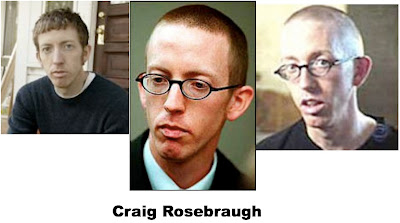


 Next year the Chinese Communist Party will most likely pick from among the fifth generation pool the leaders who will assume the reins officially in 2012 but whose lengthy succession begins rolling out almost immediately. This generation may be known to many of you already, because whether you realize or not, you went to college with many of them in the late 70s and early 80s. So yeah, this crowd does get America. In fact, these guys get globalization better than our current leaders do, because China is so much closer—historically speaking—to the infrastructure build-out process associated with globalization’s Borg-like integration wave.
 Please read John Robb's summation of Okah
 James A. Williams
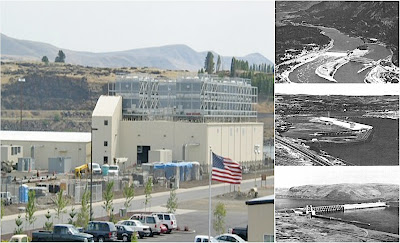

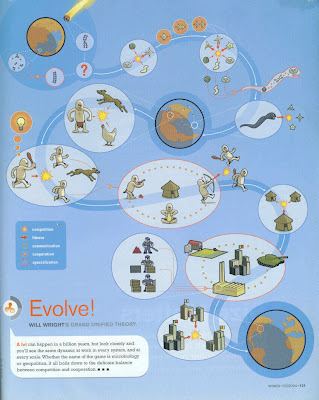

 Posts


